

Blog
Metabolic Associated Steatohepatitis (MASH)
Covenant Metabolic Specialists Health Library
Covenant Metabolic Specialists
Physician Reviewed
Dec 10, 2025
Overview
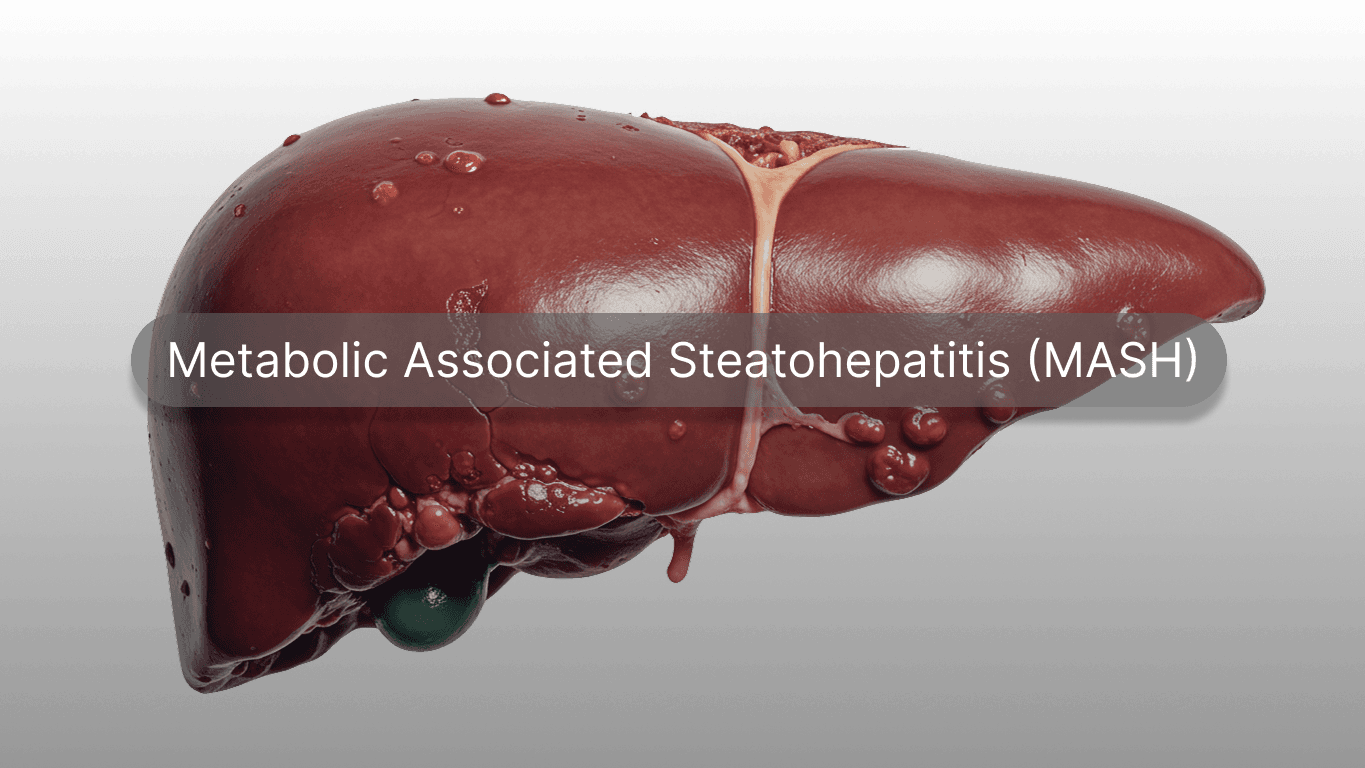
Metabolic Associated Steatohepatitis (MASH) is an advanced form of fatty liver disease that happens when too much fat builds up in the liver and the liver becomes inflamed and damaged. It usually develops in people with metabolic risk factors like type 2 diabetes, obesity, high blood pressure, and abnormal cholesterol.
MASH is serious because, over time, it can lead to scarring (fibrosis), cirrhosis, liver failure, and even liver cancer—often without obvious symptoms until the disease is advanced. The good news: if it’s found early, changes in lifestyle, medication, and targeted metabolic care can slow, stop, or even partially reverse the damage.
Worried about your liver?
Take our 3-minute Metabolic & Liver Risk Quiz at quiz.mycms.health to see if you may be at risk for MASH and whether you qualify for advanced treatment options.
Table of Contents
What Is Metabolic Associated Steatohepatitis (MASH)?
How MASH Fits Into Metabolic Liver Disease (MASLD vs MASH)
Causes and Risk Factors
Signs and Symptoms
How MASH Is Diagnosed
Why MASH Matters: Complications and Long-Term Risks
Treatment Options and Lifestyle Changes
How Covenant Metabolic Specialists Can Help
Frequently Asked Questions (FAQ)
When to Talk to a Doctor (and Your Next Step)
AI Summary (Quick Take)
MASH = inflamed fatty liver. Metabolic Associated Steatohepatitis (MASH) is a type of fatty liver disease where excess liver fat triggers inflammation and damage to liver cells.
It’s driven by metabolism. MASH is closely linked to metabolic risk factors like type 2 diabetes, obesity, high blood pressure, high triglycerides, and insulin resistance.
Often silent at first. Many people with MASH have no symptoms until scarring becomes more advanced, which is why screening is so important.
Serious if ignored. Untreated MASH can lead to fibrosis, cirrhosis, liver failure, and liver cancer, and it also raises the risk of heart disease and stroke.
It’s treatable—especially early. Weight loss, nutrition, activity changes, medication, and metabolic optimization can reduce liver fat and inflammation.
You don’t have to figure it out alone. Covenant Metabolic Specialists uses advanced diagnostics and personalized metabolic care to help detect and manage MASH before it becomes life-threatening.
What Is Metabolic Associated Steatohepatitis (MASH)?
Your liver is one of the hardest-working organs in your body. It filters toxins, processes nutrients, helps control blood sugar and cholesterol, and supports your immune system. When too much fat builds up in the liver due to metabolic problems, this is called Metabolic dysfunction-Associated Steatotic Liver Disease (MASLD)—formerly known as “nonalcoholic fatty liver disease (NAFLD).”
MASH is the more serious form of this condition.
MASLD = fat in the liver caused by metabolic problems.
MASH = fat plus inflammation and damage to liver cells.
With MASH, the liver isn’t just storing extra fat—it’s actively injured. Over time, this ongoing damage can lead to scar tissue and permanent loss of healthy liver function.
How MASH Fits Into Metabolic Liver Disease (MASLD vs MASH)
You may hear several new terms as liver societies move away from “nonalcoholic” language and toward metabolic-based language:
MASLD – Metabolic dysfunction-Associated Steatotic Liver Disease
Fat in the liver driven by metabolic risk factors (like diabetes, obesity, high blood pressure, abnormal cholesterol).
MASH – Metabolic dysfunction-Associated Steatohepatitis
A more advanced stage where there is fat and inflammation and injury to liver cells, often with scar tissue.
Think of MASLD as Step 1 (fatty liver) and MASH as Step 2 (inflamed and injured liver). Not everyone with MASLD will develop MASH, but the risk is higher if metabolic issues remain uncontrolled.
Causes and Risk Factors
MASH doesn’t happen overnight. It develops gradually, usually over years, as metabolic stress builds up in the body.
Common Risk Factors
You may be at higher risk for MASH if you have:
Type 2 diabetes or prediabetes
Obesity or increased waist size, especially belly fat
Metabolic syndrome (a combination of high blood sugar, high blood pressure, abnormal cholesterol, and central obesity)
High triglycerides or low HDL (“good”) cholesterol
High blood pressure
Polycystic ovary syndrome (PCOS)
Sleep apnea
A family history of fatty liver disease, cirrhosis, or liver cancer
Lifestyle factors that can contribute include:
Diets high in refined carbohydrates, sugary drinks, and ultra-processed foods
Sedentary lifestyle with little physical activity
Poor sleep quality and chronic stress
Have any of these risk factors?
Use our screening tool at quiz.mycms.health to see your metabolic and liver risk profile in just a few minutes.
Signs and Symptoms
One of the most challenging aspects of MASH is that many people feel completely fine, even as liver damage progresses.
Possible Symptoms (When They Do Appear)
Some people with more advanced disease may notice:
Fatigue or low energy
Discomfort or a “full” feeling in the upper right side of the abdomen
Unexplained weight changes
Swelling in the legs or abdomen (usually in later stages)
Yellowing of the skin or eyes (jaundice) in severe cases
Because these symptoms are nonspecific and often appear late, we rely heavily on blood tests, imaging, and specialized liver assessments to detect MASH early.
How MASH Is Diagnosed
There is no single “one-size-fits-all” test for MASH. Instead, your care team looks at several pieces of information together:
Medical history & risk factors – diabetes, obesity, metabolic syndrome, family history
Lab tests – liver enzymes (ALT, AST), blood sugar, A1C, cholesterol, triglycerides, and other markers
Imaging tests – such as ultrasound or more advanced scans to assess liver fat and stiffness
Non-invasive fibrosis tests – tools that estimate how much scar tissue may be present
Liver biopsy (in select cases) – sometimes needed to confirm the severity of inflammation and fibrosis
At Covenant Metabolic Specialists, our focus is on advanced, non-invasive metabolic and liver assessment whenever possible, so we can detect MASH earlier and track response to treatment over time.
Why MASH Matters: Complications and Long-Term Risks
Untreated MASH is not just a liver problem—it’s a whole-body risk.
Liver-Related Complications
Over time, MASH can lead to:
Fibrosis – build-up of scar tissue in the liver
Cirrhosis – advanced scarring that disrupts normal liver structure and function
Liver failure – when the liver can no longer perform vital tasks
Liver cancer (hepatocellular carcinoma)
Beyond the Liver
Because MASH is tied to metabolic dysfunction, it is also associated with:
Higher risk of heart attack and stroke
Worsening diabetes control
Kidney disease and other organ damage
This is why simply “watching and waiting” is no longer enough. Early detection and aggressive metabolic care can change the long-term outcome.
Treatment Options and Lifestyle Changes
There is no single magic pill for MASH, but there is a powerful combination of strategies that can lower liver fat, reduce inflammation, and protect against progression.
Core Treatment Pillars
Weight Management (when needed)
Even a 7–10% reduction in body weight can significantly improve liver fat and inflammation in many patients.
This may involve personalized nutrition, coaching, GLP-1 medications, or structured programs depending on your situation.
Metabolic Optimization
Tight control of blood sugar, blood pressure, and cholesterol
Adjusting or adding medications to support both metabolic health and liver health
Nutrition Changes
Emphasizing whole, minimally processed foods
Increasing fiber, lean proteins, healthy fats, and reducing sugary beverages and refined carbs
Tailored plans that respect your culture, preferences, and lifestyle
Physical Activity
Movement that is realistic for you—walking, strength training, or low-impact exercise
Even small, consistent increases in activity can improve insulin sensitivity and liver fat
Stopping Tobacco and Reducing Alcohol (if needed)
Alcohol may not be the cause of MASH, but it can add extra stress to an already inflamed liver.
Medications & Clinical Trials
Certain medications originally developed for diabetes or obesity can also benefit the liver.
Clinical trials may offer cutting-edge therapies for eligible patients.
You don’t have to overhaul your life overnight.
Our team at Covenant works step-by-step to build a sustainable plan—not a crash diet—so real change actually sticks. Start by visiting quiz.mycms.health to see where you stand.
How Covenant Metabolic Specialists Can Help
Covenant Metabolic Specialists is uniquely focused on metabolic and liver health—not just treating one lab number at a time.
Here’s how we approach MASH:
Integrated metabolic and liver evaluation instead of isolated tests
Advanced diagnostics to assess liver fat and scarring
Personalized treatment plans that combine lifestyle, medication, and advanced therapies
Access to clinical trials and emerging treatments when appropriate
A care team that understands that you’re more than your liver labs—your sleep, stress, hormones, and daily reality all matter
Our goal is simple but ambitious: catch MASH earlier, treat it more precisely, and help you avoid cirrhosis and transplant whenever possible.
Frequently Asked Questions (FAQ)
Q: Is MASH the same as “nonalcoholic steatohepatitis (NASH)”?
A: MASH is the updated term that emphasizes the role of metabolic dysfunction rather than what you don’t drink. It reflects the same concept: fat, inflammation, and liver cell injury not primarily driven by heavy alcohol use.
Q: I feel fine. Do I really need to worry about MASH?
A: Yes—many people with MASH have no symptoms until the disease is advanced. If you have risk factors like diabetes, obesity, or abnormal liver enzymes, it’s important to get evaluated even if you feel well.
Q: Can MASH be reversed?
A: In many people, liver fat and inflammation can improve with weight loss, better metabolic control, and targeted treatment. Advanced scarring may not fully reverse, but we can often slow or stop progression if we act early.
Q: Do I have to lose a huge amount of weight?
A: Not necessarily. For many patients, a 7–10% reduction in body weight can make a meaningful difference in liver health. Our job is to help you get there in a realistic, sustainable way.
Q: Is MASH caused by alcohol?
A: No. MASH is defined by metabolic causes, not heavy alcohol use. However, alcohol can still worsen liver injury when you already have MASLD or MASH.
Q: What if my blood tests are only “a little” abnormal?
A: Mildly abnormal liver enzymes can still be a sign of meaningful liver disease, especially if you have diabetes or metabolic syndrome. It’s better to check early than to wait for more obvious problems.
When to Talk to a Doctor (and Your Next Step)
You should consider talking to a specialist about MASH if:
You have type 2 diabetes, prediabetes, or metabolic syndrome
Your doctor has mentioned “fatty liver,” MASLD, NASH, or MASH
Your liver enzymes (ALT, AST) are elevated or “borderline high”
You have a family history of fatty liver, cirrhosis, or liver cancer
You’re concerned about your long-term liver and metabolic health
The earlier we identify MASH, the more options we have to protect your liver, your heart, and your future.
Take the next step today.
Visit quiz.mycms.health to complete your Metabolic & Liver Risk Quiz. Your results will help our team determine whether you may benefit from a deeper evaluation or advanced treatment options at Covenant Metabolic Specialists.