

Blog
What is the Pancreas?
Understanding its Crucial Role in Metabolic Dysfunction and Fatty Liver Disease
Nicholas Kruzdlo, B.S.
Physician Reviewed
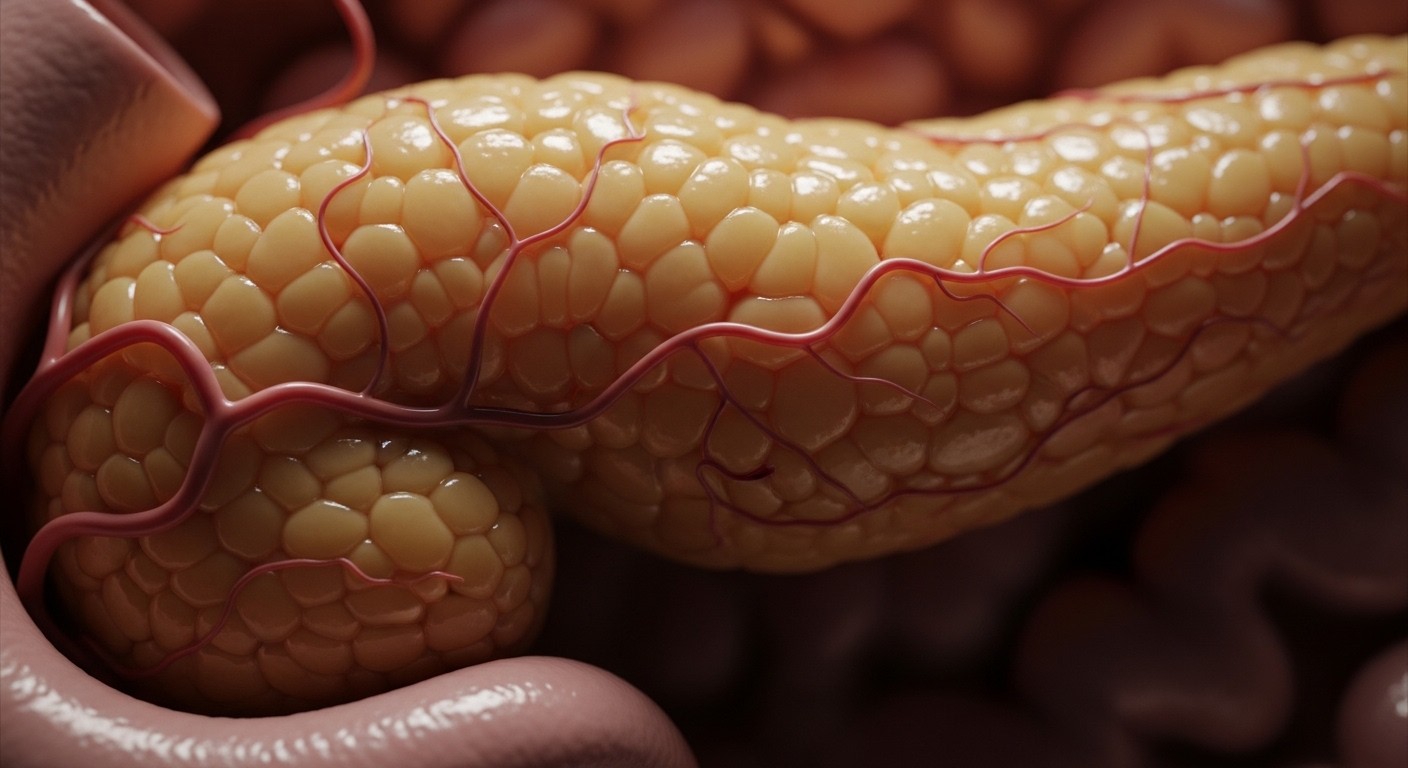
What is the Pancreas?
The pancreas is arguably the most overlooked metabolic organ in the body!
The pancreas is a vital organ located right behind the stomach and atop the liver. It plays an essential role in digestion and also blood sugar control. The pancreas can release enzymes cable of breaking down the food you eat during digestion. It releases different enzymes to break down carbohydrates, fats, and proteins.
The pancreas also releases vital hormones regulating blood sugar. In fact, the pancreas is responsible for releasing both major hormones in fat and glucose control and metabolism; insulin and glucagon.
A damaged or overwhelmed pancreas will not be able to maintain proper sugar and fat levels in the body. While also having a lesser ability to help break down food. This can lead to malnutrition, hyperglycemia, hyperlipidemia, Type 2 Diabetes, Metabolic Dysfunction, and Fatty Liver Disease.
Pancreas Exocrine Effects
The pancreas supports digestion by releasing a host of enzymes. These include amylase, lipase, and protease.
Amylase - Breaks down carbohydrates into simple sugars that the body can absorb.
Without amylase, carbohydrate digestion would be incomplete. This leads to poor energy availability and reduced nutrient absorption.
Lipase - Breaks down fats in smaller molecules called fatty acids and glycerol.
Without lipase fat would not be able to be absorbed leading to malnutrition and vitamin deficiencies.
Protease - Breaks down proteins into amino acids so the body can grow, repair, and have energy.
Without protease muscles would weaken, the body wouldn't be able to repair itself and malnutrition would occur.
Pancreas Endocrine Effects
The pancreas plays a crucial role in the regulation of fats and sugar inside the body by releasing insulin and glucagon. These two hormones are polar opposite of each other, yet they work together to create the foundation of sugar and fat regulation within the human body.
Insulin and Fat - Insulin promotes fat storage by helping fatty acids enter fat cells and stopping the breakdown of already stored fat. It tells the body to store excess fat after meals.
Glucagon and Fat - Glucagon promotes the breakdown of stored fat by causing fat cells to release their stored fat. This releases fatty acids into the blood as an energy source. It ensures the body has fuel when glucose is low.
Insulin and Sugar - Insulin regulates blood sugar by allowing glucose to enter cells where its used for energy or stored. Insulin lowers blood glucose levels by taking the glucose out of the bloodstream and into corresponding cells. It also stops preventing glucose production by the liver.
Glucagon and Sugar - Glucagon raises blood sugar by telling the liver to break down stored sugar. This releases glucose into the blood as an energy source. Glucagon ensures you have stable blood sugar between meals and during periods of fasting.
Does my Pancreas Effect my Metabolic Dysfunction?
The pancreas is one of the major organs that contribute to metabolic dysfunction. Pancreatic dysfunction and insufficiency can cause all the characteristics of metabolic dysfunction including:
Obesity
Increased visceral fat
Insulin insensitivity (type 2 diabetes)
Increased fat in the blood (hyperlipidemia)
High blood pressure (hypertension)
Pancreas Effect on Obesity
Once the pancreas produces insulin that the body doesn't respond to (insulin insensitivity) seen in pre-diabetes and early type 2 diabetes. The pancreas will continue to produce more insulin in an effort to overcome the body's insensitivity. This state is called hyperinsulinemia, or high levels of insulin in the blood. High insulin levels promote fat storage and stop fat breakdown. This leads to an increase in fatty tissue, obesity, weight gain, and high visceral fat.
Pancreas Effect on High Triglycerides
Once a person's pancreas insulin producing cells, beta cells get burnt out from continuous stimulation due to high blood glucose. The few remaining beta cells can't produce enough insulin. This causes an increase in fat breakdown and the release of triglycerides and fatty acids into the bloodstream. Leading to high triglycerides.
Pancreas Effect on T2D
The pancreas can release too much insulin due to insulin insensitivity, or not enough insulin because of damaged beta cells. In both of these cases the insulin can not keep up and do its job. This leads to sustained elevated blood glucose levels. These high glucose levels will cause a hyperglycemia, or type 2 diabetes diagnosis to be made.
Pancreas Effect on Fatty Liver Disease
The pancreas ability to properly manage glucose and triglycerides throughout the body allows it to work in tandem with the liver to maintain a healthy metabolic environment. When the pancreas can no longer keep up with the bodies blood glucose and the insulin produced is no longer working the progression to fatty liver disease can occur.
When insulin can no longer properly signal the body if fat and glucose need to be stored or released, dysregulation occurs. The excess insulin produced signals the body to store more and more fat in the body including the internal organs and the liver. Fat accumulation and high blood glucose levels cause a toxic fatty and sugary environment that causes fat buildup in the liver and cell death. This is the start of fatty liver disease and its progression to fibrosis of the liver.
Pancreas in Review
The pancreas is crucial in maintaining metabolic stability inside the body. It helps digest our food and turn it into usable forms of energy. Thereafter storing and releasing these energy stores to keep us alive. Damage to the pancreatic beta cells due to high blood sugar, is an increasingly common issue, due to high sugar, high carbohydrates, western diets, etc. One of the best ways to protect the pancreas is through a healthy diet, the Mediterranean diet is a great example. Damage to the pancreas will not only affect the pancreas but its downstream effects can lead to many disease states.
Protect your pancreas at all costs! Ensure you eat healthy limiting bouts of prolonged hyperglycemia within the body.
Medical Advice Disclaimer
The content on CMS’s website (including, without limitation, any testimonials) is for general informational purposes only. It is not intended to diagnose or treat any condition, illness, or disease. All content from this site or connected social media channels is not intended to be used for medical diagnosis or treatment. Please consult a licensed medical professional for medical advice. CMS does not guarantee the accuracy, completeness, or timeliness of any information presented on this website.