

Blog
Where Does Liver Fat Come From?
The Science Behind Fat Buildup in the Liver and Why It Matters
Christina George, APRN, FNP-BC
Physician Reviewed
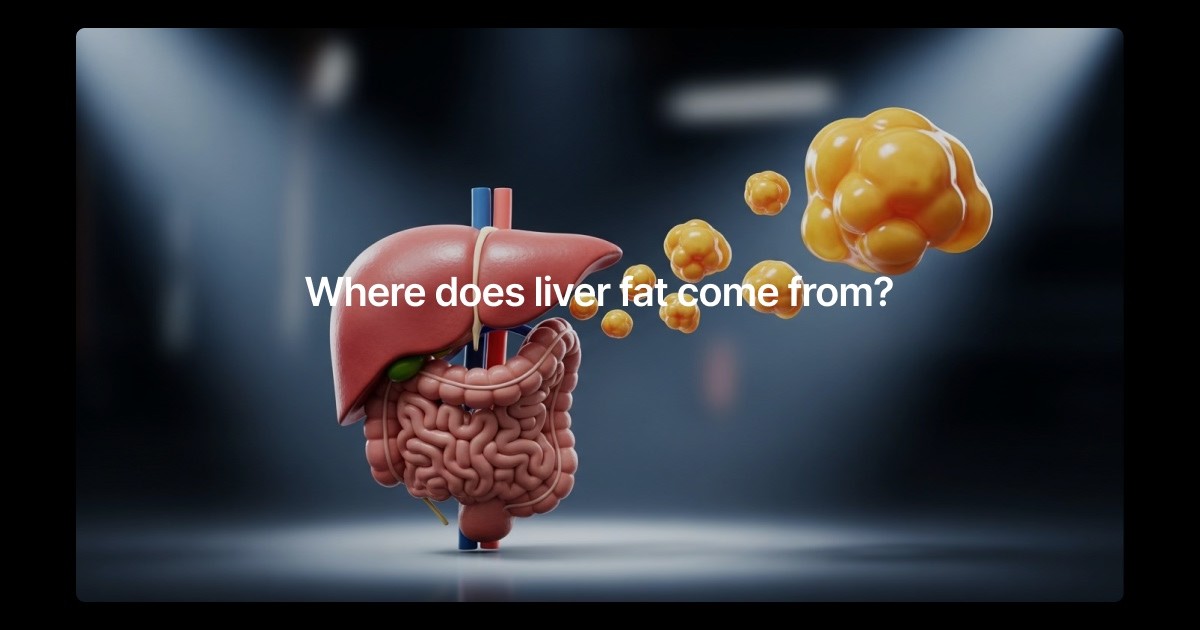
What is Fatty Liver?
Liver steatosis, often called fatty liver, is a condition in which excess fat builds up inside liver cells. While small amounts of fat in the liver are normal, problems arise when fat accumulation exceeds the liver's ability to process and export it. Understanding how and why this happens can help explain why liver steatosis is so common and why it matters for long-term health.
What Does the Liver Do?
The liver plays a central role in managing energy. It processes fats from the diet, makes new fats when energy intake is high, and packages fats so they can be safely transported to other tissues. Liver steatosis develops when these finely balanced processes become overwhelmed. This most often occurs in the setting of excess calorie intake, particularly from refined carbohydrates and fats, combined with reduced physical activity.
What Causes Fatty Liver?
One of the key drivers of liver steatosis is insulin resistance. Insulin is a hormone that helps move glucose from the bloodstream into cells. When tissues become resistant to insulin, the pancreas produces more of it to compensate. High insulin levels signal the liver to convert more glucose into fat. At the same time, insulin resistance causes fat tissue to release more free fatty acids into the bloodstream. These fatty acids are taken up by the liver, further increasing the fat load within liver cells.
Another important factor is impaired fat export. The liver normally packages fat into particles called very low-density lipoproteins and releases them into the bloodstream. In liver steatosis, this export system can become inefficient. When fat production and delivery exceed export capacity, fat droplets accumulate inside liver cells.
Why is This a Problem?
As fat builds up, it can disrupt normal liver function. Excess fat makes liver cells more vulnerable to stress and injury. Fat metabolism generates reactive molecules that can damage cellular structures, including mitochondria, which are responsible for energy production. This cellular stress can trigger inflammation and activate immune pathways within the liver.
Not everyone with liver steatosis will develop more serious liver disease. In many people, fat accumulation remains relatively stable. However, in some individuals, ongoing metabolic stress leads to inflammation, liver cell injury, and eventually scarring. Over time, this scarring can progress and impair blood flow and liver function.
Liver steatosis is closely linked to conditions such as obesity, type 2 diabetes, high cholesterol, and high blood pressure. For this reason, it is often considered a manifestation of broader metabolic dysfunction rather than an isolated liver problem. Research continues to uncover why some people progress to advanced liver disease while others do not. Improving our understanding of liver steatosis at a biological level is essential for developing effective prevention strategies and targeted treatments.
What Can You Do About It?
Covenant Metabolic Specialists is dedicated to identifying liver steatosis early and connecting patients with appropriate care. Through comprehensive metabolic evaluations and noninvasive screening tools, our clinic helps determine an individual's risk for fatty liver disease and related conditions. For patients who meet specific criteria, Covenant Metabolic Specialists may also offer access to clinical research studies evaluating emerging therapies for fatty liver disease and its more advanced forms. Participation in clinical trials allows eligible patients to receive close medical monitoring while contributing to research that advances understanding and treatment of liver disease. Our goal is to support patients through education, screening, and innovative research focused on improving long-term liver and metabolic health.
Medical Advice Disclaimer
The content on CMS’s website (including, without limitation, any testimonials) is for general informational purposes only. It is not intended to diagnose or treat any condition, illness, or disease. All content from this site or connected social media channels is not intended to be used for medical diagnosis or treatment. Please consult a licensed medical professional for medical advice. CMS does not guarantee the accuracy, completeness, or timeliness of any information presented on this website.